Best Spine Specialist Doctor In Gurugram — Complete Guide to Spine Care, Treatment & Recovery
Back and neck pain are no longer limited to ageing populations. Modern lifestyles, long sitting hours, injuries, stress, and improper body mechanics are increasingly affecting spinal health. The spine plays a crucial role in supporting movement, balance, and nerve function, and even minor damage can significantly impact daily life.
Choosing the Best Spine Specialist Doctor In Gurugram becomes essential when pain starts interfering with routine activities, mobility, or overall wellbeing. Proper diagnosis, timely intervention, and personalized treatment can prevent long-term complications and help individuals return to an active, pain-free lifestyle.
Spine care today focuses not only on treating pain but also on restoring function, improving posture, and preventing recurrence.
Best Spine Specialist Doctor In Gurugram — Advanced Solutions for Spine Disorders
The spine is a complex structure made up of vertebrae, discs, nerves, muscles, and ligaments working together. Ageing, trauma, structural abnormalities, or degenerative changes can injure these components, leading to chronic pain and neurological symptoms.
A comprehensive spine evaluation often involves multiple specialists working together to identify the exact cause of discomfort before considering surgical treatment. Surgery is usually recommended only when conservative treatments fail or when nerve compression threatens mobility or function.
Modern spine treatment emphasizes:
- Accurate diagnosis
- Non-surgical management whenever possible
- Minimally invasive procedures
- Faster recovery and rehabilitation
- Long-term spine health maintenance
Common Spine Conditions That Require Specialist Care
Spinal disorders may develop gradually or appear suddenly after injury. Some of the most frequently treated conditions include:
- Herniated or bulging discs
- Degenerative disc disease
- Spinal stenosis (narrowing of the spinal canal)
- Spondylolisthesis (vertebra slipping out of position)
- Spinal deformities such as scoliosis or kyphosis
- Vertebral fractures
- Arthritis affecting the spine
- Nerve compression and radiculopathy
These conditions can affect the cervical (neck), thoracic (mid-back), or lumbar (lower back) regions.
Types of Spine Surgery
When non-surgical treatments do not provide relief, different surgical procedures may be recommended depending on the condition.
Discectomy
Removal of a herniated disc pressing on nerves or the spinal cord to relieve pain and numbness.
Laminectomy (Spinal Decompression)
Performed to treat spinal stenosis by removing portions of bone to create more space for nerves.
Foraminotomy
Enlarges the opening through which nerve roots exit the spinal canal, reducing nerve compression.
Spinal Fusion
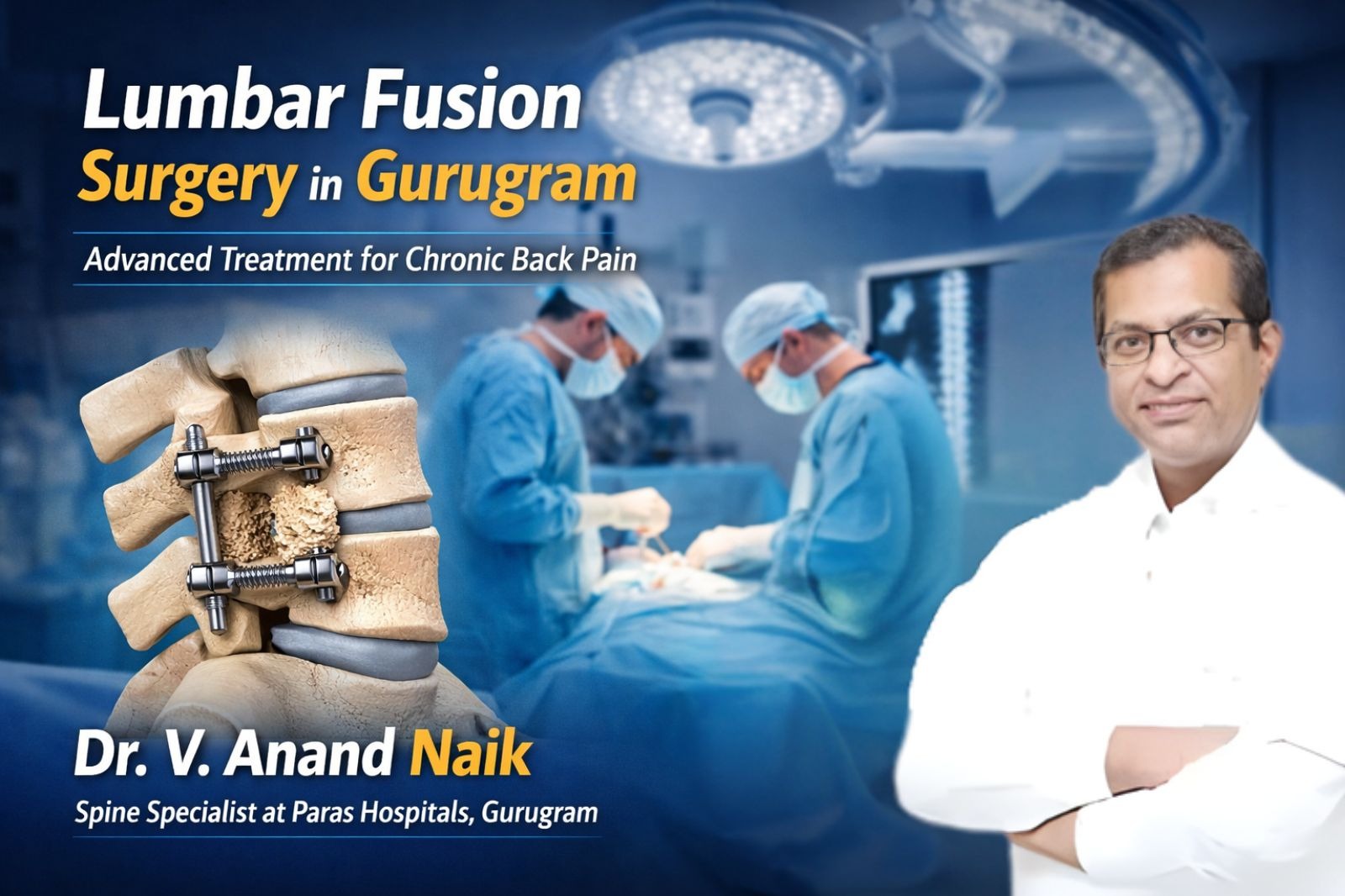
Two or more vertebrae are joined together using bone grafts or implants to stabilize the spine.
Artificial Disc Replacement
Damaged discs are replaced with synthetic ones to preserve spinal movement and flexibility.
Vertebroplasty & Kyphoplasty
Procedures used to strengthen fractured vertebrae, especially in cases of weak bone density.
Nucleoplasty
A minimally invasive treatment using radiofrequency energy to reduce disc pressure and relieve lower back pain.
Symptoms of Spine Disorders
Spinal conditions may initially appear mild but gradually worsen. Common warning signs include:
- Persistent back or neck pain
- Heaviness or numbness in limbs
- Tingling or “pins and needles” sensation
- Radiating pain to arms or legs
- Stiffness or reduced flexibility
- Difficulty lifting objects or bending
- Loss of movement or coordination
- Fatigue and restricted mobility
Emergency Symptoms
Immediate medical attention is needed if symptoms include:
- Loss of bladder control
- Paralysis or severe weakness
- Breathing difficulty after injury
- Loss of sensation
- Severe spinal trauma
When Should You Consult a Spine Specialist?
Consultation becomes important if you experience:
- Chronic pain lasting several weeks
- Herniated disc symptoms
- Difficulty walking or balancing
- Vertebral fractures or injuries
- Degenerative spine conditions
- Progressive nerve-related symptoms
Early evaluation helps prevent permanent nerve damage and improves recovery outcomes.
Diagnosis of Spine Disorders
A detailed assessment is required before planning treatment. Evaluation typically includes:
Physical Examination
Assessment of movement, reflexes, muscle strength, and nerve function.
Imaging Tests
- X-Rays: Detect fractures and bone abnormalities
- CT Scans: Provide detailed structural images
- MRI Scans: Evaluate nerves, discs, and soft tissues
- PET & Bone Scans: Used in specific complex conditions
These investigations help identify the exact cause of symptoms and guide treatment planning.
Non-Surgical Treatment Options
Many spine conditions improve without surgery. Conservative treatments include:
- Physiotherapy and rehabilitation programs
- Pain management therapies
- Anti-inflammatory medications
- Lifestyle and posture correction
- Exercise and strengthening routines
- Injection-based therapies
Surgery is considered only when these methods fail to provide relief or neurological risks increase.
Minimally Invasive Spine Surgery — Modern Advancement
Minimally invasive techniques have transformed spine treatment by using smaller incisions and advanced instruments.
Advantages include:
- Less tissue damage
- Reduced blood loss
- Shorter hospital stay
- Faster recovery
- Lower post-operative discomfort
These approaches allow patients to resume normal activities sooner compared to traditional surgery.
Recovery After Spine Surgery
Recovery depends on the type of procedure and individual health factors. Rehabilitation plays a key role in restoring strength and mobility.
Recovery usually involves:
- Guided physiotherapy
- Gradual return to activities
- Pain management
- Posture training
- Lifestyle adjustments
Following medical advice carefully helps achieve long-term success.
Diseases Treated by Spine Specialists
Spine specialists manage a wide range of musculoskeletal and neurological conditions, including:
- Spinal arthritis
- Degenerative disorders
- Disc prolapse
- Spinal tumours
- Trauma-related injuries
- Congenital spine disorders
- Osteoporosis-related fractures
- Spinal deformities
Treatment plans are customized according to each patient’s condition and lifestyle needs.
Expert Spine Care and Specialized Treatment
Dr. V. Anand Naik is widely recognized for his expertise in diagnosing and treating a wide range of spinal disorders. He is known as a leading spine specialist at Paras Hospitals, Sushant Lok, Gurugram, where he provides comprehensive care for patients suffering from spine and pain-related conditions. His approach focuses on precise diagnosis, personalized treatment strategies, and helping patients regain mobility with long-term relief.
Frequently Asked Questions About Spine Surgery
Is spine surgery always necessary?
No. Most spine conditions are first treated using non-surgical methods. Surgery is recommended only when conservative treatments fail or serious nerve compression exists.
Can spine surgery completely remove pain?
The goal is to significantly reduce pain and improve function. Results vary depending on the condition and recovery process.
Is age a limitation for spine surgery?
Treatment decisions depend more on overall health rather than age alone.
How important is rehabilitation?
Rehabilitation is essential for restoring mobility, strengthening muscles, and preventing recurrence.
Moving Towards a Pain-Free Future
Spine health directly influences quality of life. Ignoring symptoms can lead to chronic discomfort and reduced mobility. Early consultation, accurate diagnosis, and advanced treatment options make recovery more effective and sustainable.
Choosing the Best Spine Specialist Doctor In Gurugram ensures access to modern spine care focused on long-term wellness, improved movement, and a healthier, active lifestyle.
Expert Spine Care — Dr. V. Anand Naik
Dr. V. Anand Naik is a highly respected spine surgeon with 25+ years of clinical experience in advanced spine care and complex spinal reconstruction.
Current Designation
Director – Spine Surgery
MS (Orthopedic)
PFET – FRACS (Australia)
Board Certified Spine Surgery Fellowship — Australia, Singapore & South Korea
Dr. Naik is widely recognized for diagnosing and treating complex spinal disorders at Paras Hospitals, Sushant Lok, Gurugram, where he provides comprehensive spine and pain management care focused on long-term recovery, precision treatment, and improved mobility.
Clinical Excellence & Innovations
Dr. Naik has introduced and pioneered several advanced spine procedures in India and Asia, reflecting his commitment to innovation and patient safety. His major contributions include:
Lumbar Hybrid with second-generation mono-bloc viscoelastic Artificial Disc Replacement (LP-ESP) introduced in India
Extreme Lateral Interbody Fusion (XLIF) — part of the first team in Asia
Navigated Sacroiliac Joint Fusion using SiLok screws
MIS 360 Fusion for adult degenerative scoliosis
Metallic Titanium additive 3D-printed spine reconstruction implants for complex spinal tumours
Development of real-time robotic navigation for lumbar disc replacement, enhancing surgical precision and outcomes
Recently launched next-generation Artificial Disc Replacement (ADR) technology, advancing motion-preserving spine surgery and improving long-term functional recovery for patients
Dr. Naik also holds multiple spine device innovations and patents, contributing significantly to modern spine surgery advancements.