Sciatica Pain in Women: Causes, Effects, and Daily Challenges | Best doctor for sciatica treatment In Delhi
Sciatica pain is a common condition that affects many women and can significantly interfere with daily comfort, mobility, and overall quality of life. Unlike general back pain, sciatica involves irritation or compression of the sciatic nerve—the longest nerve in the human body. The pain often begins in the lower back or buttock and travels down the leg, making routine activities difficult and exhausting.
Understanding Sciatica Pain in Women
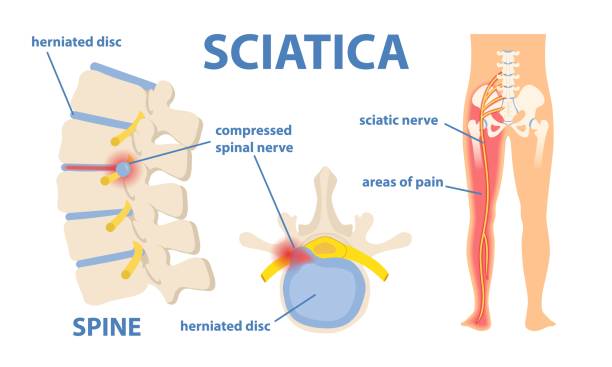
Sciatica is not a disease but a symptom caused by pressure on the sciatic nerve. This nerve starts in the lower spine and runs through the hips, thighs, and legs. When compressed, it sends pain signals along its path, resulting in radiating pain rather than localized discomfort.
Women may experience sciatica at different stages of life due to hormonal changes, posture-related strain, pregnancy, or lifestyle factors.
Best doctor for sciatica treatment In Delhi: Why Sciatica Pain Impacts Women Differently
Sciatica pain can be particularly challenging for women because of anatomical structure, hormonal fluctuations, and daily physical demands. Many women balance professional responsibilities with household work, prolonged sitting, bending, and lifting, which can worsen nerve compression and pain intensity.
Common Causes of Sciatica Pain in Women
Hormonal Changes
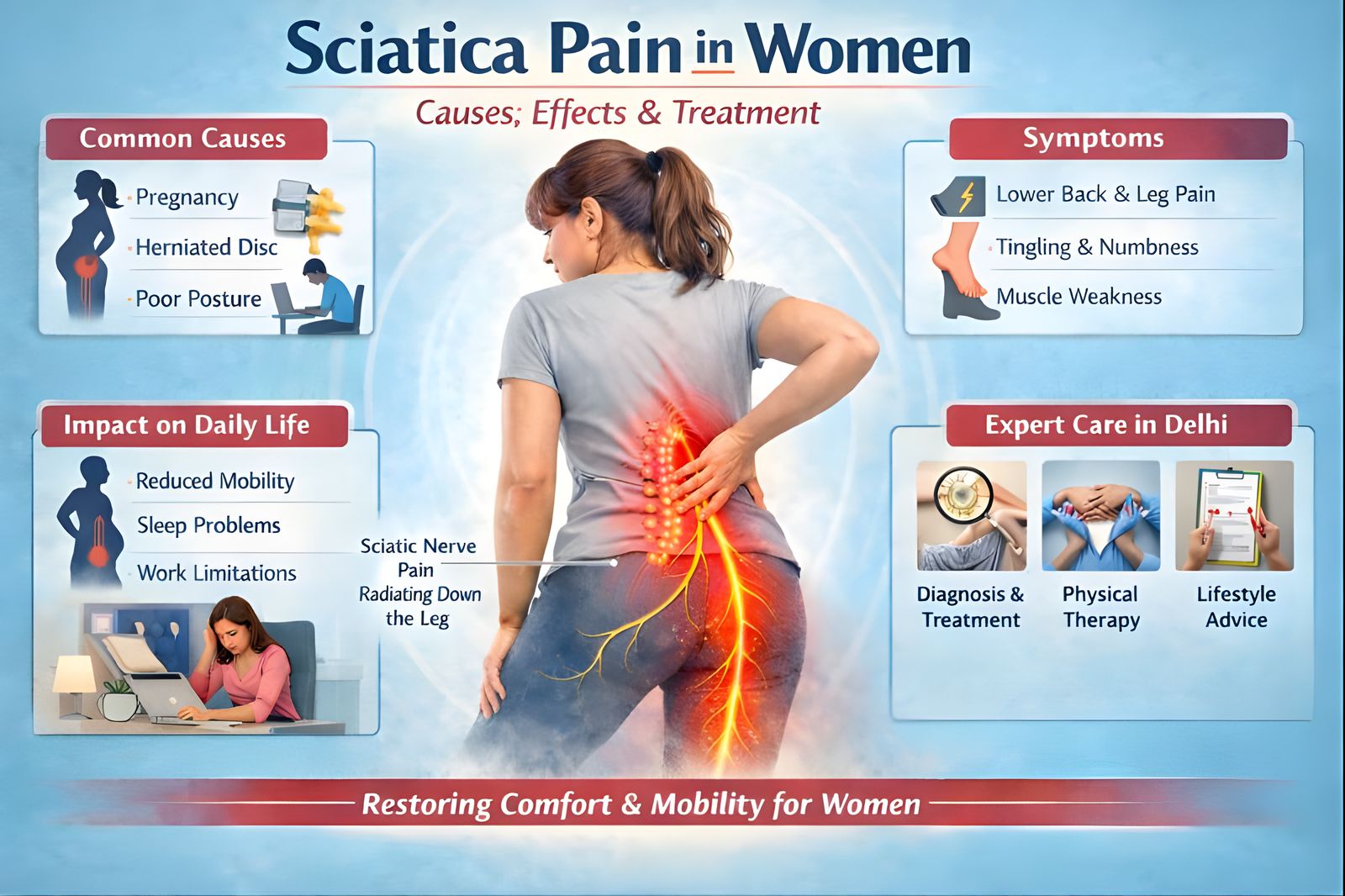
Hormonal fluctuations during menstruation, pregnancy, and menopause can affect muscle tone, joint stability, and pain sensitivity, increasing pressure on the sciatic nerve.
Pregnancy and Postpartum Changes
During pregnancy, weight gain, posture changes, and pressure from the growing uterus may irritate the sciatic nerve. After delivery, weakened core and pelvic muscles can also contribute to sciatica pain.
Herniated or Bulging Discs
A disc in the lower spine may bulge or rupture, pressing against the sciatic nerve and causing sharp, radiating pain down the leg.
Poor Posture and Prolonged Sitting
Incorrect sitting posture, long hours at a desk, or lack of ergonomic support can strain the lower back and hips, increasing nerve irritation.
Weak Core and Back Muscles
Lack of physical activity weakens the muscles supporting the spine, making women more vulnerable to sciatica.
Symptoms of Sciatica Pain in Women
Common symptoms include:
- Sharp, shooting, or burning pain in the lower back or leg
- Tingling or numbness in the foot or toes
- Muscle weakness in one leg
- Pain that worsens with sitting or standing for long periods
- Difficulty walking or bending
Symptoms usually affect one side of the body but can vary in intensity.
How Sciatica Pain Affects Daily Life
Reduced Mobility
Simple movements like walking, climbing stairs, or standing can become painful, limiting independence.
Impact on Work and Household Activities
Sitting for long periods, lifting objects, or performing household chores may increase pain and discomfort.
Sleep Disturbance
Sciatica pain often worsens at night, making it difficult to sleep comfortably. Poor sleep further increases fatigue and pain sensitivity.
Emotional and Mental Health Effects
Chronic pain can lead to frustration, anxiety, mood swings, and reduced quality of life.
Sciatica Pain Across Different Life Stages
During Menstrual Cycles
Hormonal changes may increase inflammation and pain sensitivity, worsening sciatica symptoms.
During Pregnancy
Sciatica during pregnancy can restrict movement and add to physical discomfort, making daily activities more challenging.
With Aging
Age-related spinal degeneration, reduced muscle strength, and bone health changes can increase the risk of persistent sciatica pain.
Factors That Can Worsen Sciatica Pain
- Prolonged sitting or standing
- Sudden bending or twisting
- Lifting heavy objects incorrectly
- Poor sleeping posture
- Stress-related muscle tension
- Sedentary lifestyle
Avoiding these triggers can help reduce flare-ups.
Long-Term Effects of Untreated Sciatica
If left unmanaged, sciatica pain may lead to:
- Chronic pain and stiffness
- Reduced physical activity
- Muscle weakness
- Postural imbalance
- Decreased quality of life
Early awareness and proper care are essential to prevent long-term complications.
Conclusion: Importance of Expert Care for Sciatica Pain
For women experiencing persistent or severe sciatica pain, timely and specialized care is crucial. Dr. V. Anand Naik, widely recognized as the Best doctor for sciatica treatment In Delhi, is known for his expertise in diagnosing and managing complex spine and nerve-related conditions.
With a deep understanding of nerve compression disorders and a patient-focused approach, he plays a vital role in helping individuals regain mobility, reduce pain, and improve overall quality of life.