
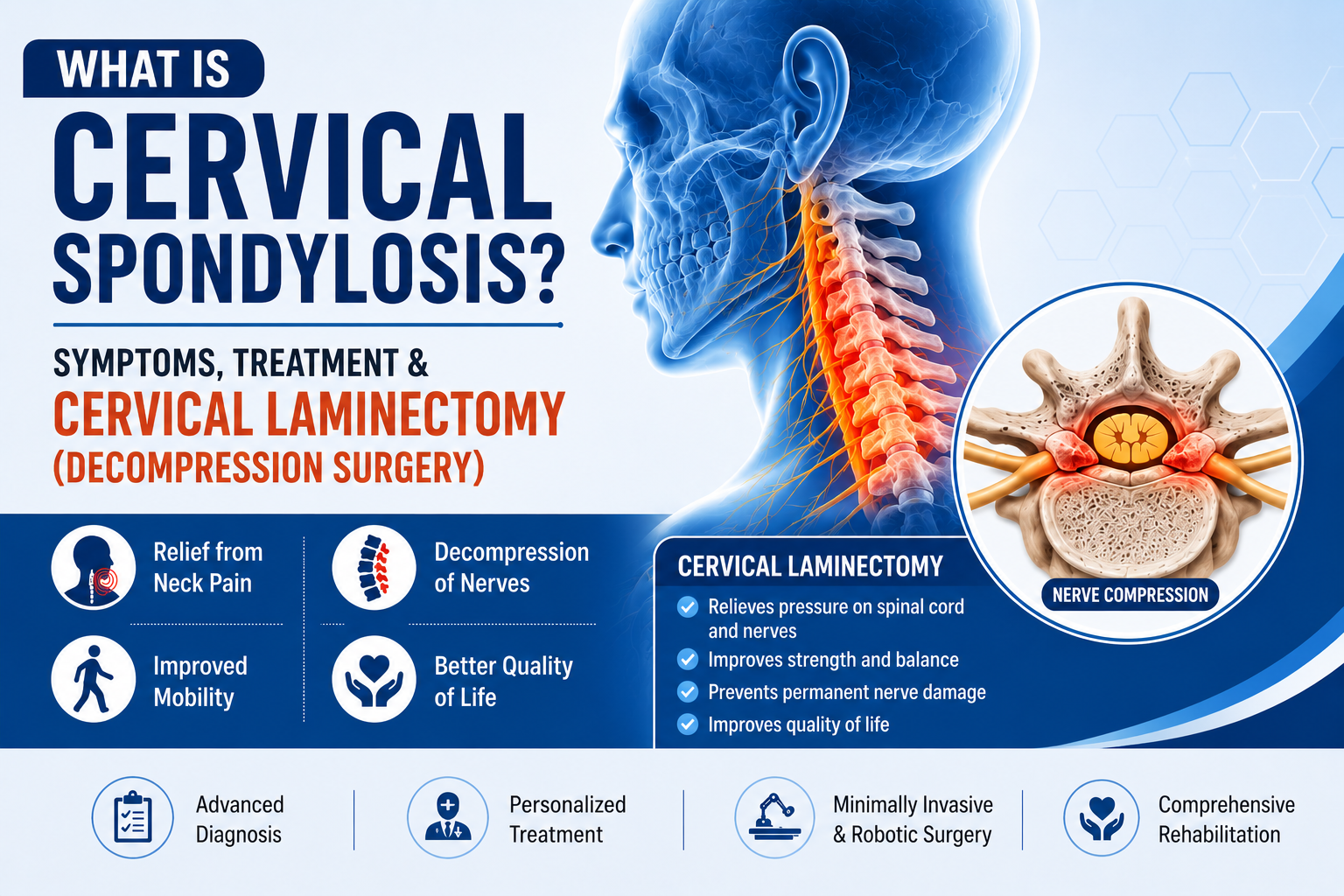
What is Cervical Spondylosis?
Cervical spondylosis is a common age-related condition that affects the cervical spine (neck). It develops due to gradual wear and tear of the spinal discs, joints, ligaments, and vertebrae. As these structures degenerate over time, they can lead to stiffness, chronic neck pain, nerve compression, and in severe cases, pressure on the spinal cord.
Although cervical spondylosis is most commonly seen in individuals above 40 years of age, it is increasingly being diagnosed in younger adults because of prolonged desk work, poor posture, excessive mobile phone use, and sedentary lifestyles.
At New Delhi Spine, patients receive comprehensive diagnosis and advanced treatment for cervical spine disorders, including conservative care and modern surgical procedures such as cervical laminectomy (decompression surgery).
What Causes Cervical Spondylosis?
The cervical spine supports the head and allows smooth neck movement. Over time, natural ageing causes spinal discs to lose water content and flexibility. This leads to disc degeneration, narrowing of the spinal canal, formation of bone spurs, and thickening of ligaments, all of which may compress nearby nerves or the spinal cord.
Common causes include:
- Age-related spinal degeneration
- Degenerative disc disease
- Cervical disc prolapse (slipped disc)
- Bone spur formation (osteophytes)
- Cervical spinal stenosis
- Previous neck injuries
- Poor posture while working
- Long hours on computers or smartphones
- Smoking
- Genetic predisposition
Symptoms of Cervical Spondylosis
Symptoms vary depending on the severity of degeneration and whether nerves or the spinal cord are compressed.
Common symptoms include:
- Persistent neck pain
- Neck stiffness
- Pain radiating to the shoulders
- Arm pain
- Tingling or numbness in the hands and fingers
- Weakness in the arms
- Frequent headaches originating from the neck
- Difficulty turning the neck
- Muscle spasms
If the spinal cord becomes compressed (cervical myelopathy), patients may also experience:
- Difficulty walking
- Poor balance
- Loss of hand coordination
- Weakness in the legs
- Difficulty buttoning clothes or writing
- Changes in bowel or bladder control
These symptoms require immediate evaluation by an experienced spine specialist.
How is Cervical Spondylosis Diagnosed?
A spine specialist performs a detailed clinical examination and recommends imaging tests to determine the severity of spinal degeneration.
Diagnostic investigations may include:
- Digital X-rays
- MRI Scan
- CT Scan
- Dynamic Flexion-Extension X-rays
- Nerve Conduction Study (NCS)
- Electromyography (EMG)
MRI is considered the most useful investigation because it clearly shows disc prolapse, spinal cord compression, and nerve root involvement.
Non-Surgical Treatment for Cervical Spondylosis
Most patients improve without surgery.
Physiotherapy
A customized physiotherapy program helps:
- Improve posture
- Increase neck flexibility
- Strengthen neck muscles
- Reduce pain and stiffness
- Improve overall spinal health
Lifestyle Modifications
Simple lifestyle changes play an important role in preventing disease progression:
- Maintain proper sitting posture
- Use ergonomic workstations
- Avoid prolonged mobile phone use
- Take regular breaks while working
- Exercise regularly
- Maintain a healthy body weight
Cervical Collar
A cervical collar may provide temporary support during acute episodes but should only be used under medical supervision.
When is Surgery Required?
While conservative treatment is effective for many patients, surgery may become necessary when:
- Pain persists despite months of treatment
- Progressive weakness develops
- There is severe spinal cord compression
- Walking becomes difficult
- Balance problems worsen
- MRI shows advanced cervical stenosis
- Cervical myelopathy is diagnosed
One of the most effective procedures for these conditions is cervical laminectomy (decompression surgery).
What is Cervical Laminectomy (Decompression Surgery)?
Cervical laminectomy is a surgical procedure performed to relieve pressure on the spinal cord and nerve roots. During the surgery, the surgeon removes the lamina—the bony arch at the back of the vertebra—to create more space for the compressed spinal cord.
This procedure is commonly recommended for patients with:
- Cervical spinal stenosis
- Cervical spondylotic myelopathy
- Severe cervical spondylosis
- Ossification of the posterior longitudinal ligament (OPLL)
- Multiple bone spurs causing spinal cord compression
In many cases, spinal fixation with screws and rods may also be performed to maintain spinal stability.
Benefits of Cervical Laminectomy
The procedure offers several advantages, including:
- Relief from spinal cord compression
- Reduction in neck pain
- Improved arm strength
- Better hand coordination
- Improved balance while walking
- Prevention of permanent nerve damage
- Improved quality of life
- Better mobility and independence
Recovery After Cervical Laminectomy
Recovery depends on the patient’s age, overall health, and severity of neurological symptoms before surgery.
Generally:
- Walking begins within 24 hours after surgery.
- Hospital stay ranges from 3–5 days.
- Light activities can usually be resumed within 4–6 weeks.
- Physiotherapy helps restore strength and flexibility.
- Complete neurological recovery may take several months.
Following the surgeon’s rehabilitation plan is essential for achieving the best long-term outcome.
How Can You Prevent Cervical Spondylosis?
Although ageing cannot be prevented, healthy habits can reduce the risk of developing severe cervical spine problems.
Preventive measures include:
- Maintain good posture while sitting and standing
- Exercise regularly
- Strengthen neck and shoulder muscles
- Avoid prolonged screen time without breaks
- Sleep on a supportive pillow
- Quit smoking
- Maintain a healthy weight
- Practice ergonomic workplace habits
Why Choose Dr. V. Anand Naik at New Delhi Spine?
If you are searching for the best doctor for cervical spondylosis in Gurgaon, or the best doctor for cervical spondylosis in Gurugram, Dr. V. Anand Naik is widely recognized for his expertise in treating complex spine disorders.
With over two decades of experience in spine surgery, Dr. V. Anand Naik has successfully treated thousands of patients with cervical spine conditions. He has received advanced international training in spine surgery from Australia, Singapore, Japan, South Korea, and the USA, and specializes in minimally invasive spine surgery, cervical decompression, cervical laminectomy, artificial disc replacement, spinal deformity correction, and robotic navigation-assisted spine surgery.
At New Delhi Spine, every patient receives a personalized treatment plan based on detailed clinical evaluation and advanced imaging. Whenever possible, non-surgical treatment is recommended first. Surgery is considered only when it offers the best opportunity for pain relief, neurological recovery, and improved quality of life.